Lost in Kanazawa’s Living Markets and Hidden Streets
Kanazawa, Japan, isn’t just a dot on the map—it’s a sensory journey. I wandered its commercial heart, where centuries-old wooden shop fronts meet sizzling street food and artisans shaping gold leaf by hand. This isn’t tourism; it’s immersion. From the lively Omicho Market to quiet back-alley boutiques, every corner pulses with culture and commerce intertwined. You don’t just see Kanazawa—you feel it, taste it, and carry it home in your memory.
The Pulse of Omicho Market: Where Tradition Feeds the City
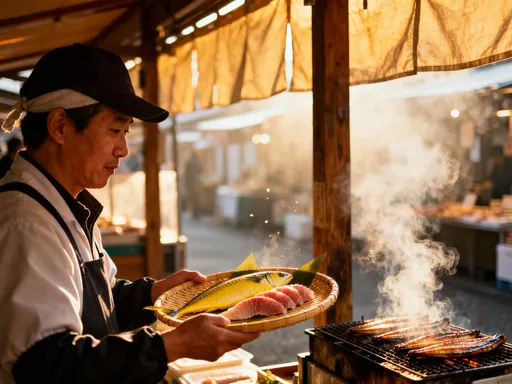
Omicho Market is the beating heart of Kanazawa’s daily life, a place where tradition isn’t preserved behind glass but lived in real time. Stretching four blocks through the city center, this bustling marketplace has served the people of Kanazawa for over 300 years, evolving from a simple fish trading post into a vibrant hub of culinary and cultural exchange. Each morning, just as the first light filters over the Hokuriku Mountains, vendors begin arranging their displays—glistening trays of raw seafood, pyramids of seasonal vegetables, and baskets of pickled vegetables that carry the tang of generations-old recipes. The air hums with energy: the rhythmic chop of knives on cutting boards, the friendly banter between neighbors, and the occasional burst of laughter from a stall owner offering a free sample of grilled scallop on a stick.
What sets Omicho apart from typical tourist markets is its authenticity. While visitors are welcome, this is not a performance. The market feeds Kanazawa first. Locals arrive with reusable shopping bags, moving from stall to stall with practiced ease—selecting the freshest cut of kanpachi (amberjack), sniffing bundles of wild mountain vegetables, or haggling gently over the price of Hokkaido sea urchin. The seafood here is exceptional, sourced daily from the Sea of Japan. At one counter, a vendor slices translucent yellowtail sashimi with a single, fluid motion, laying each piece on a bed of crushed ice. Nearby, another grills anago (saltwater eel) over charcoal, the scent of smoky sweetness drifting down the aisle. Even something as simple as jellyfish salad, dressed in sesame oil and vinegar, becomes a revelation in texture and balance.
Beyond the food, Omicho offers a window into regional pride. Stalls proudly display labels indicating the catch’s origin—Noto Peninsula, Suzu, Wajima—each name carrying a story of coastal communities and sustainable fishing practices. Some vendors have operated in the same spot for decades, their children now taking over the family business. This continuity fosters trust and connection, turning commerce into community. Visitors are not merely customers; they are guests in a living tradition. Whether sampling a warm cup of sake-steamed oysters or watching an elderly fishmonger expertly fillet a whole squid, one begins to understand that Omicho is more than a place to eat—it’s a place to belong.
Kenrokuen’s Shadow: Commercial Charm Along Kanazawa’s Garden Edges
Just a short walk from Omicho Market lies Kenrokuen, one of Japan’s most celebrated landscape gardens. But beyond its manicured paths and iconic stone lanterns, a quieter commercial rhythm unfolds. The streets surrounding Kenrokuen—Nagamachi and Higashi Dori—are lined with boutique shops that seamlessly blend artistry, history, and daily life. These stores do not compete with the garden’s serenity; they extend it. Here, the principles of balance, subtlety, and craftsmanship that define the garden also shape the city’s commercial identity.
Visitors stepping off the garden’s main path often find themselves drawn to small, unassuming storefronts with wooden lattices and hand-painted signs. Inside, they discover wagashi confectioners shaping delicate sweets from red bean paste and yuzu, their colors mimicking the changing seasons. One shop has been making these treats for over 150 years, using molds carved in the Meiji era. The sweets are not just food—they are edible art, often served with matcha in tea houses to enhance the meditative experience. Nearby, artisans sell sheets of washi paper, handmade from mulberry fibers, each sheet bearing the faint watermark of the region’s heritage. These papers are used for calligraphy, gift wrapping, and even lampshades, their soft glow echoing the lanterns that illuminate Kenrokuen at night.
Perhaps the most iconic product of this area is gold leaf. Kanazawa produces over 99% of Japan’s gold leaf, and its presence is everywhere—from the gilded tea bowls in specialty stores to the gold-dusted desserts in cafes. At a family-run studio, visitors can watch artisans hammer gold into sheets so thin they flutter like silk in the breeze. A single gold bar, no larger than a credit card, can be stretched to cover over 9,000 square centimeters. This meticulous craft, passed down through generations, is not just preserved but actively commercialized in ways that honor its roots. A small gold-leaf workshop might sell ornate boxes, while a modern café offers gold-leaf lattes, turning tradition into an accessible experience. The result is a commercial district that feels neither touristy nor sterile, but alive with purpose and pride.
Higashi Chaya District: Stepping into a Merchant’s Dream
If Kenrokuen represents nature in harmony, and Omicho represents daily sustenance, then the Higashi Chaya District embodies the elegance of leisure and refinement. Once a thriving quarter for geisha and wealthy merchants, this preserved neighborhood offers a glimpse into Kanazawa’s cultural golden age. The district’s narrow lanes, paved with uneven stones, are lined with two-story wooden buildings featuring latticed windows, heavy wooden doors, and the soft glow of paper lanterns that come alive at dusk. These are not replicas—they are original structures, carefully maintained and protected as part of Kanazawa’s living heritage.
Today, many of these historic chaya (tea houses) have been adapted into shops and cafes, but they retain their architectural and cultural integrity. Inside, the scent of tatami mats and roasted green tea lingers in the air. Some tea houses still host geisha performances for private guests, preserving a tradition that is increasingly rare in modern Japan. Others welcome visitors with matcha parfaits served in ceramic bowls, or delicate silk fans painted with cherry blossoms and cranes. The transformation of these spaces into commercial venues could have diluted their authenticity, but Kanazawa has managed the balance with care. Shopkeepers often wear traditional attire, and background music features the soft pluck of the koto, ensuring that even a simple purchase feels like participation in a ritual.
The commercial life of Higashi Chaya is not about mass production but about curated experience. A visitor might spend an hour browsing a tiny gallery where a local artist sells hand-painted scrolls, or pause at a counter to watch a craftsman inlay mother-of-pearl into a wooden box. These interactions are slow, intentional, and deeply personal. There is no pressure to buy; instead, there is an invitation to observe, to appreciate, to connect. In this way, commerce becomes a form of cultural transmission. Every purchase supports not a global brand, but a local artisan, a family business, a piece of history that might otherwise fade.
Beyond the Guidebook: Hidden Shopping Lanes and Local Favorites
While Omicho and Higashi Chaya draw the crowds, Kanazawa’s true commercial soul lies in its lesser-known corners. These are the places where locals shop, where artisans work in plain sight, and where discovery feels personal rather than prescribed. One such gem is Hashiba-dori, a quiet street that runs parallel to the main tourist routes. Here, the storefronts are unassuming—no flashing signs, no English menus—yet inside, they house some of the city’s most authentic offerings. A family-run pickle shop sells jars of takuan (pickled daikon) using a brine recipe unchanged for 80 years. A tiny bookstore specializes in regional literature and vintage maps, its shelves crammed with history.
Another hidden treasure is Sai-no-kuni Sohonten, a multi-story emporium that feels more like a cultural archive than a store. Spread across several floors, it showcases locally made crafts, textiles, and food products, each accompanied by a detailed explanation of its origin and production. Visitors can watch a potter shaping Kutani ware on a spinning wheel, or sample rice crackers made from heirloom grains grown in nearby villages. What makes this place remarkable is its mission: to connect people not just to products, but to the stories behind them. A simple wooden spoon becomes meaningful when you learn it was carved by a craftsman who uses only fallen timber from protected forests.
These spaces thrive precisely because they are not designed for mass tourism. They operate at a human scale, where time slows and attention deepens. A shopkeeper might invite you to sit and taste a seasonal tea, or explain how a particular fabric is dyed using plant extracts. These moments of connection transform shopping from a transaction into a dialogue. In an age of globalized retail, where stores look the same from Tokyo to Toronto, Kanazawa’s hidden lanes remind us that commerce can still be intimate, meaningful, and rooted in place.
Modern Meets Traditional: Kanazawa’s Contemporary Commercial Spaces
Kanazawa does not resist modernity—it redefines it. Nowhere is this more evident than at Kanazawa Station, a striking piece of contemporary architecture that welcomes visitors with a sweeping wooden lattice inspired by traditional sukashi (openwork) design. The station is not just a transit hub; it is a destination in itself, housing a multi-level shopping concourse known as Hakuza. Here, modern retail coexists with regional craft, creating a space that feels both cosmopolitan and deeply local.
Every hour, the Tsudumi Clock in the station’s atrium comes to life with a choreographed performance of rotating drums and falling balls, drawing crowds like a modern-day town crier. Around it, shops sell everything from high-end gold-leaf cosmetics to packaged shirako (cod milt), a regional delicacy. The design of the space—warm wood tones, natural light, flowing lines—echoes the aesthetics of Kenrokuen and the tea houses, ensuring that even in a modern setting, the city’s heritage remains visible. This intentional blending of old and new is not superficial; it reflects a deeper philosophy that tradition and progress are not opposites, but partners.
The Pola Museum of Art annex, located within the station complex, further illustrates this fusion. While the main Pola Museum sits in the forested hills outside the city, this urban outpost brings curated exhibitions of Japanese art and design to the everyday traveler. Visitors can view a rotating display of shibori textiles or Kaga-yuzen dyes before boarding their train, turning a commute into a cultural encounter. Even the station’s restrooms, designed with natural materials and soft lighting, reflect a commitment to beauty and comfort. In Kanazawa, modernity is not about speed or efficiency alone—it is about creating spaces that honor the human experience.
The Art of Shopping: How Kanazawa Turns Craft into Commerce
In Kanazawa, shopping is not a passive act—it is an engagement with art, history, and sustainability. The city’s most celebrated crafts—gold leaf, Kutani ware, and Kaga yuzen—are not relics of the past but living traditions sustained by thoughtful commercialization. Visitors don’t just buy souvenirs; they participate in a system that values quality, authenticity, and environmental responsibility.
Take gold leaf production, a craft perfected in Kanazawa since the Edo period. The process begins with pure gold, alloyed with a small amount of silver and copper, then hammered by hand for hours until it reaches a thickness of just 1/10,000th of a millimeter. This labor-intensive method cannot be automated, ensuring that each sheet carries the imprint of human care. Today, gold leaf is used not only in art and decoration but in food, cosmetics, and even medicine. A gold-leaf ice cream cone, while seemingly extravagant, supports dozens of small workshops that have survived because their craft remains in demand.
Similarly, Kutani ware—porcelain painted with bold, colorful designs—has evolved from feudal-era tableware to a contemporary art form. Local kilns invite visitors to observe painters at work, their brushes moving with precision over delicate ceramic surfaces. Some studios offer hands-on workshops, allowing guests to paint their own plate or cup. These experiences deepen appreciation and justify the higher price point, which in turn supports fair wages and sustainable materials. Kaga yuzen, the region’s signature silk dyeing technique, follows the same model. Artisans use natural dyes and hand-stenciling methods that have changed little in 300 years. When a visitor buys a Kaga yuzen scarf, they are not just acquiring a beautiful object—they are helping to keep a rare skill alive.
What makes this commercial ecosystem sustainable is its transparency. Stores often display photos of the artisans, explain the production process, and emphasize eco-friendly practices. Packaging is minimal and recyclable. There is no mass production, no hidden labor. This ethical approach resonates deeply with modern travelers, especially women aged 30 to 55, who value authenticity, quality, and social responsibility. In Kanazawa, buying something beautiful also means doing something good.
Walking the Full Circle: From Market to Memory
By the time the sun sets over Kanazawa, casting golden light across the tiled roofs of the Higashi Chaya district, the journey through the city’s commercial landscape comes full circle. It began with the sharp tang of vinegar in a jellyfish salad at Omicho Market, continued through the quiet reverence of a gold-leaf workshop, and culminated in the warm sip of matcha in a centuries-old tea house. Each stop was not just a place to see or buy, but a moment to feel—to connect with the hands that shaped the crafts, the voices that called out in the market, the silence between footsteps on wooden verandas.
Kanazawa teaches us that true travel is not measured in landmarks visited, but in moments of presence. Its markets, streets, and shops are not separate from culture—they are culture. They are where tradition breathes, where artisans thrive, and where visitors are welcomed not as consumers, but as participants. In a world where so much feels disposable, Kanazawa offers something rare: continuity. The same skills that adorned samurai homes now decorate modern kitchens. The same fish that fed Edo-period families still graces dinner tables today.
To walk Kanazawa’s streets is to understand that commerce, when rooted in respect and care, can be a force for preservation. Every purchase becomes a quiet act of support, every conversation a thread in a larger tapestry. And when you leave—perhaps with a gold-leaf box in your bag and the scent of roasted tea in your hair—you carry more than souvenirs. You carry a memory of a city that honors its past not by freezing it in time, but by living it, one thoughtful exchange at a time. Come not to buy, but to belong. Even if just for a day, Kanazawa lets you in.