You’ve Never Tasted Cambodia Until You’ve Eaten Here
Siem Reap isn’t just about ancient temples and jungle-covered ruins—its soul lives in the sizzle of street grills, the scent of lemongrass, and the warmth of shared meals. I went searching for Angkor, but what truly changed me was the food. From bustling morning markets to midnight noodle stalls, every bite told a story. This is more than cuisine—it’s culture on a plate, served with pride and generations of tradition. The rhythms of daily life here pulse through open-air kitchens and family-run carts, where recipes passed down through decades simmer in clay pots and charcoal fires. To taste Siem Reap is to understand its heartbeat, one fragrant spoonful at a time.
The Rhythm of Food in Siem Reap
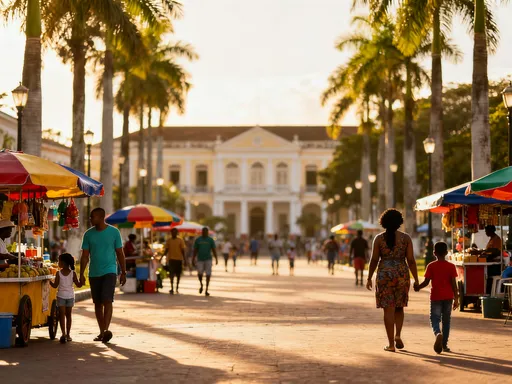
In Siem Reap, food is not merely consumed—it unfolds. It structures the day, shapes community, and defines moments of connection. Long before the sun climbs above the rooftops, the city stirs with the clatter of woks and the rustle of banana leaves. At Psar Leu, the city’s largest market, vendors arrange pyramids of rambutan and dragon fruit, string up garlands of garlic and dried chilies, and lay out glistening silver fish on banana-lined trays. The air hums with bargaining, laughter, and the rhythmic thud of cleavers meeting wood. By six in the morning, locals are already seated on plastic stools, slurping steaming bowls of kuy teav—rice noodles in clear pork broth, topped with crispy wontons, fresh herbs, and a squeeze of lime. This is breakfast as ritual, a quiet start to the day that grounds people in routine and flavor.
Food in Siem Reap functions as both nourishment and narrative. Families gather at low tables in the late afternoon, sharing platters of stir-fried morning glory, sour fish soup, and sticky rice steamed in bamboo. Meals are rarely eaten in silence; they are punctuated with stories, updates, and the occasional burst of teasing from elders. Street vendors double as neighborhood anchors—known by name, trusted for consistency. A woman selling grilled bananas on the corner knows which customer prefers extra coconut milk, just as the noodle cart owner remembers who takes their prahok k’tis with extra chili. These small, daily interactions weave a social fabric that is both resilient and intimate, built not in grand gestures but in the quiet exchange of food and familiarity.
Evenings bring a different energy. As temple tours end and the heat softens, families spill into open-air restaurants or pull up chairs along sidewalks. Children dip spring rolls into tamarind sauce while parents sip iced jasmine tea. The pace is unhurried, the conversation easy. There is no rush to clear the table; meals are not transactions but extensions of time spent together. This rhythm—rooted in seasonality, community, and tradition—reveals a way of life where food is not an afterthought but the very thread that holds the day together.
Temple Tours and Tasting Breaks: A Perfect Pair
Exploring Angkor Wat is a physical journey, but it is also a sensory one. As the morning light filters through ancient stone corridors and lotus ponds shimmer under the rising sun, the body begins to crave more than just history—it craves refreshment. This is where food becomes not just a complement to sightseeing, but an essential part of the experience. A cold coconut shaken open by a roadside vendor, its sweet water sipped through a straw, offers instant relief from the humidity. A banana pancake cooked on a hot griddle, folded with palm sugar and sesame seeds, provides quick energy after hours of walking through vast temple complexes. These are not mere snacks—they are moments of reconnection, small pleasures that ground the traveler in the present.
Near major sites like Angkor Thom and Ta Prohm, small stalls line the access roads, run by local families who have served generations of visitors. Their offerings are rooted in Khmer tradition: grilled corn brushed with chili salt, skewers of marinated pork, and glasses of sugarcane juice pressed on the spot. Unlike generic tourist fare, these items reflect authentic tastes—simple, satisfying, and deeply tied to local habits. A num pang, Cambodia’s beloved baguette sandwich, is a favorite among both locals and informed travelers. Stuffed with pâté, pickled vegetables, cilantro, and a smear of chili sauce, it delivers a burst of textures and flavors that lingers long after the last bite. Eating one under the shade of a banyan tree, wiping sweat from your brow, you begin to understand how food fuels not just the body but the spirit of exploration.
These tasting breaks also serve as cultural waypoints. They offer a chance to pause, observe, and engage. A vendor might explain how the palm sugar in your drink is harvested from wild trees, or a tuk-tuk driver might recommend his favorite noodle stand just off the main road. These interactions, sparked by a shared meal, transform a sightseeing itinerary into a more meaningful journey. They remind us that the grandeur of Angkor is not isolated from daily life—it exists alongside it, enriched by the rhythms of the people who live in its shadow.
Street Food: Where Authenticity Lives
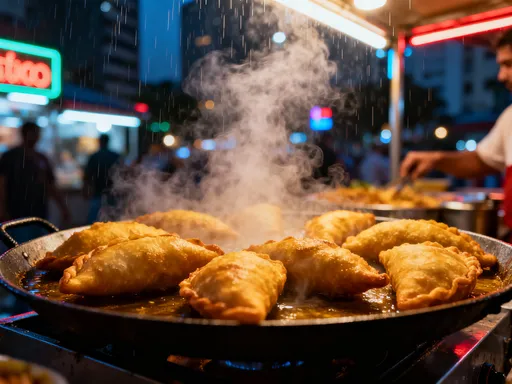
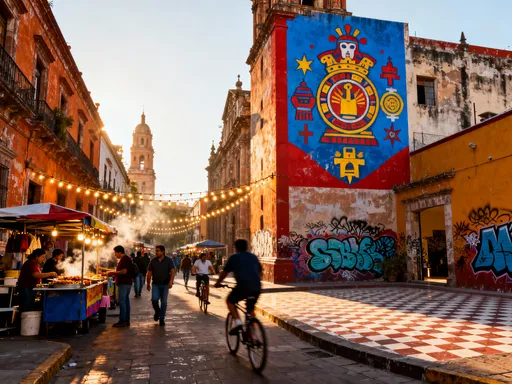
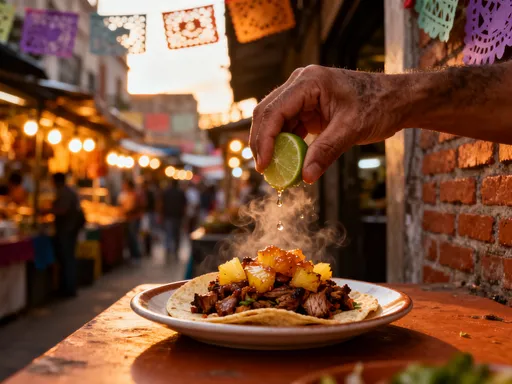
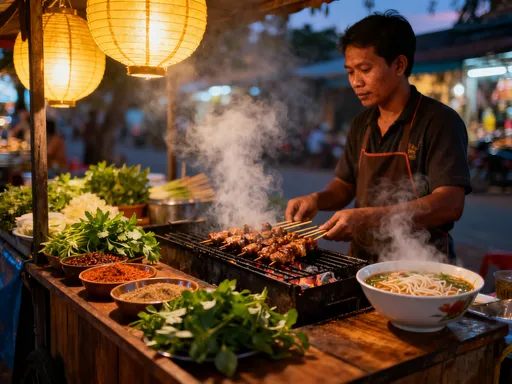
If Siem Reap has a culinary soul, it pulses strongest in its street food scene. As dusk settles and neon signs flicker to life, the city’s alleys transform into open-air dining rooms. Beneath string lights and rusted awnings, vendors tend to bubbling pots and sizzling grills, their hands moving with practiced ease. The scent of turmeric, galangal, and smoked fish drifts through the air, drawing both locals and curious travelers to plastic tables crammed along narrow sidewalks. This is where authenticity thrives—not in polished restaurants with English menus, but in the unscripted moments of flavor discovery.
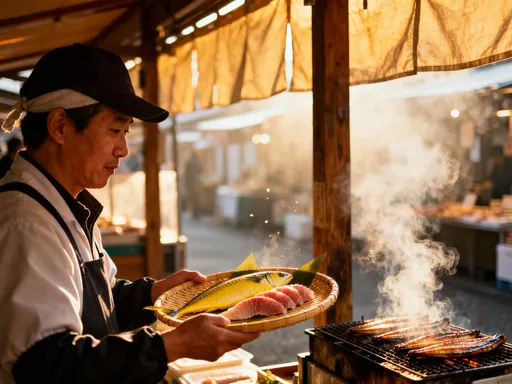
A nighttime food crawl through the quieter lanes near Pub Street reveals a different side of Khmer cuisine. Here, you’ll find amok, the national dish, steamed in banana leaves—a delicate fish curry blended with coconut milk, kaffir lime, and red curry paste, its richness balanced by a side of pickled mango. Nearby, a cart sells sach ko, marinated beef grilled over charcoal and served with a spicy green chili dip and a mountain of fresh herbs. For the adventurous, there are fermented fish dishes like prahok jien, where salted fish is fried with garlic and chilies, its pungent aroma an acquired taste but a beloved staple in rural homes. These dishes are not performed for tourists; they are eaten because they are good, because they are home.
For visitors, navigating street food safely is a matter of observation and instinct. The golden rule is simple: follow the crowd. Stalls with high turnover—where locals line up and plates are served quickly—are more likely to use fresh ingredients and maintain cleanliness. Look for vendors who handle food with tongs or gloves, store raw and cooked items separately, and keep their cooking surfaces clean. Bottled water and sealed drinks are advisable, and it’s wise to avoid raw vegetables unless they’ve been visibly washed or peeled. But beyond hygiene, there’s a deeper principle at play: respect. Approaching street food with curiosity rather than caution, with a willingness to try rather than a fear of getting sick, opens the door to some of the most genuine experiences a destination can offer.
Cooking Classes That Change Your Palate
In recent years, hands-on Khmer cooking classes have become one of Siem Reap’s most transformative attractions—not because they produce expert chefs, but because they foster deep cultural understanding. These are not performances for tourists; they are immersive lessons in flavor, history, and resilience. Most begin not in the kitchen, but in the market. Under the guidance of a local instructor, participants learn to select ripe kaffir limes, identify fresh turmeric root, and distinguish between varieties of holy basil. They touch, smell, and taste ingredients long before they cook them, building a sensory memory that lasts far longer than any recipe card.
Back in the open-air kitchen, the real work begins. Using a stone mortar and pestle, students pound curry pastes from scratch—grinding lemongrass, garlic, galangal, and dried chilies into fragrant pastes that form the base of so many Khmer dishes. They learn the delicate balance of sweet, sour, salty, and spicy that defines the cuisine, understanding that flavor is not accidental but intentional, shaped by generations of trial and taste. Preparing a dish like prahok ktis—a creamy dip made with fermented fish, coconut milk, and egg—can be a revelation. At first, the smell may be challenging, even intense, but with guidance, students come to appreciate its depth, its role in preserving protein in a tropical climate, and its place at the family table.
These classes do more than teach cooking; they build empathy. By spending hours peeling, chopping, and stirring alongside local instructors, many of whom are women who have rebuilt their lives after decades of hardship, participants gain a quiet respect for Cambodian ingenuity and quiet strength. The kitchen becomes a space of exchange, where questions are answered with patience, and laughter flows as freely as the coconut milk. At the end of the session, when everyone sits down to eat the meal they’ve prepared, there is a shared sense of accomplishment—not just in the food, but in the connection forged through it.
From Village Kitchens to Urban Bites
To understand Siem Reap’s food culture fully, one must look beyond the city limits. A short tuk-tuk ride into the surrounding countryside reveals a different pace, a different kitchen. In villages like Banteay Srei or Kouk Ror, meals are still prepared over wood fires, rice is pounded by hand, and fish are caught daily from nearby canals. A home-cooked meal here might consist of grilled snakehead fish, a bowl of sour soup made with tamarind and wild herbs, and a platter of fresh vegetables served with a pungent prahok dipping sauce. People eat seated on mats or low benches, sharing from communal dishes, their hands the only utensils needed.
These rural traditions are not relics—they are living practices that continue to shape Siem Reap’s urban food scene. In recent years, a new generation of Cambodian chefs has begun to reinterpret these village flavors with modern sensibility. Restaurants like Marum and Cuisine Wat Damnak focus on locally sourced ingredients, traditional techniques, and subtle presentation, offering tasting menus that tell the story of the region. A dish might feature smoked eggplant from a nearby farm, paired with fermented black beans and a drizzle of palm sugar syrup. Another might serve river prawns with kaffir lime leaves and a foam of tamarind broth. These are not attempts to westernize Khmer cuisine, but to elevate it—honoring its roots while inviting the world to taste its complexity.
This evolution is not without tension. Some worry that as Siem Reap grows, the authenticity of its food culture may be diluted by commercialization. Yet, the opposite may be true. The very popularity of Khmer cuisine—both among locals and visitors—has sparked a renewed pride in traditional flavors. Young Cambodians are reclaiming their culinary heritage, opening cafes that serve rice porridge with century eggs, or bakeries that craft banana sticky rice cakes using their grandmother’s recipe. In this way, the village kitchen does not disappear—it migrates, adapts, and endures.
Markets as Living Museums of Flavor
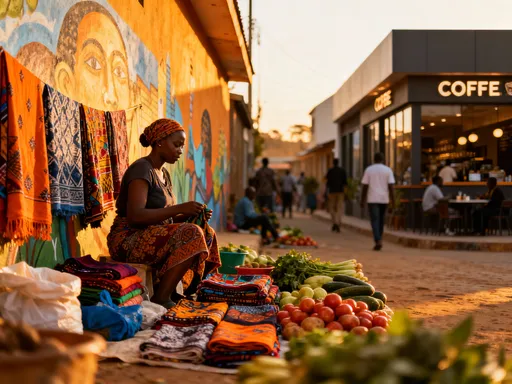
To walk through Psar Leu or the smaller Orussey Market is to step into a living archive of Khmer food history. These are not sterile supermarkets but vibrant, chaotic spaces where the past and present coexist. Stalls overflow with ingredients that define the national palate: fermented fish paste in clay jars, golden blocks of palm sugar wrapped in banana leaves, bunches of wild mint and rice paddy herb, and mounds of turmeric and galangal roots still dusted with soil. Each item carries a story—of harvest, preservation, and regional variation. A vendor from Kampong Thom might sell a spicier variety of chili paste, while one from Takeo offers a sweeter palm sugar harvested from a specific kind of palm tree.
Engaging with vendors is often the most enlightening part of the experience. Many have spent decades behind their counters, learning recipes from mothers and aunts, adapting to changing tastes while holding fast to tradition. Ask about a particular herb, and you might hear how it’s used to soothe stomachaches or added to postpartum meals. Inquire about a fermented sauce, and you could learn about the months-long process of aging fish in salt and rice bran. These conversations—simple, unscripted, and rich with knowledge—reveal a depth of culinary wisdom that no guidebook can capture.
For travelers, markets offer more than shopping—they offer immersion. The act of selecting ingredients, watching them weighed on rusted scales, and seeing them wrapped in paper or banana leaves connects you to a system of food that is seasonal, local, and deeply human. It’s a reminder that cuisine is not just about taste, but about land, labor, and memory. In a world of fast food and global chains, Siem Reap’s markets stand as testaments to a different way of eating—one that values patience, seasonality, and the quiet pride of craftsmanship.
Eating Like a Local: Beyond the Tourist Path
To truly taste Siem Reap, one must move beyond the well-trodden paths. This does not require fluency in Khmer or a fearless stomach, but a willingness to observe, to follow, and to engage. Start by eating where locals eat. At noon, when office workers stream out of government buildings, follow them to the shaded stalls near the river. You’ll find women ladling out bowls of bai sach chrouk—grilled pork over rice, served with a half-boiled egg and a side of pickled cabbage. At dusk, watch where tuk-tuk drivers stop for dinner; their choices are rarely guided by profit but by hunger and habit.
Learning a few basic Khmer phrases can open doors. A simple "Sot te?" (How much?) or "Som phlov" (Thank you) shows respect and often invites a smile, a recommendation, or even an extra spoonful of sauce. Pointing at what someone else is eating is perfectly acceptable—sometimes, the best meals begin with a gesture. Mobile apps can help, but nothing replaces the spontaneity of discovery: the scent of grilled chicken drawing you down an alley, the sight of an old man flipping banana fritters on a charcoal stove, the sound of laughter from a family gathered around a shared curry.
The goal is not to "rough it" or prove bravery, but to participate. To eat like a local is to slow down, to accept that not every meal will be familiar, and to trust that discomfort can lead to delight. It is to understand that food is not just fuel, but a language—one that speaks of history, resilience, and hospitality. In Cambodia, where decades of hardship have shaped a culture of quiet strength and warm generosity, every shared meal carries a deeper meaning. It is an offering, a welcome, a way of saying, "You are here, and you are part of this moment."
In Siem Reap, every meal is an invitation—to slow down, to connect, to understand. The temples will take your breath away, but the food will stay with you long after you’ve left. To eat here is to experience resilience, warmth, and identity on a plate. Don’t just visit Cambodia. Taste it.