You Gotta See These Hidden Corners of Vaduz – Not Just the Castle!
Think Vaduz is just a tiny dot on the map with a flashy castle? Think again. I spent a week exploring its quiet streets and sunlit hillsides, and what I found blew my mind. Beyond the postcard views, this small capital reveals layered neighborhoods, each with its own rhythm and charm. From artsy enclaves to riverside escapes, Vaduz offers subtle surprises—if you know where to look. Let me take you through the real districts most tourists miss.
Vaduz City Center: More Than Just a Postcard
The heart of Vaduz pulses with a quiet confidence that belies its size. Städtle, the main street winding through the city center, is often the first impression visitors get—and rightly so. Lined with boutique shops selling handmade chocolates, alpine ceramics, and family-run wine cellars, it's a curated blend of tradition and modernity. Yet beyond the polished storefronts lies a deeper story. This is not a museum exhibit but a living neighborhood where locals stop for morning pastries, post office errands, and casual coffee catch-ups. The architecture here balances sleek glass façades with stone-clad buildings, reflecting Liechtenstein’s pride in both innovation and heritage.
One of the most rewarding ways to experience the city center is by arriving early, before the tour buses roll in around 10 a.m. By 8:30, the light slants golden across the rooftops, and the only sounds are footsteps on cobblestone and the soft clink of café trays. A favorite among residents is a small bakery near the Parliament building, where fresh goat cheese tarts and rye bread are served with herbal tea. This quiet ritual sets the tone for a more mindful exploration. The Kunstmuseum, with its striking black basalt exterior, anchors the cultural identity of the district. While it draws art lovers from across Europe, its exhibitions often spotlight regional artists, reinforcing a sense of national continuity.
What makes Städtle special is its human scale. You can walk its entire length in under 15 minutes, yet each block offers something distinct—whether it’s a pop-up flower stand in spring, a seasonal wine tasting at a family-run cellar, or a temporary sculpture installation in the central plaza. The blend of accessibility and authenticity makes this area an ideal starting point. It provides orientation not just geographically but emotionally, helping visitors understand how a nation of just over 39,000 people maintains a strong civic identity. By beginning here, you gain context for the quieter, more residential zones that unfold as you move outward from the core.
The Royal Quarter and Its Quiet Grandeur
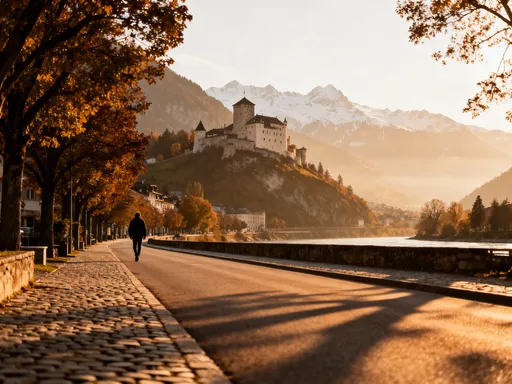
Above the rooftops of Vaduz, perched on a forested hillside, stands the iconic Vaduz Castle—the official residence of the Prince of Liechtenstein. While it dominates the skyline and appears on countless postcards, the truth is that the castle is not open to the public. This might disappoint some tourists, but those who understand its symbolic role often find the surrounding area even more rewarding. The Royal Quarter, as it’s informally known, is less about access and more about atmosphere. The trails leading up from the city offer solitude, panoramic views, and a sense of connection to the country’s enduring monarchy.
The Castle Trail, a well-marked path beginning near the eastern edge of the city center, is the most popular route. Winding through pine and larch trees, it rises gently over 30 minutes to a series of vantage points. From here, you can see the Rhine Valley stretching into Switzerland, with snow-capped peaks forming a dramatic backdrop. These viewpoints are carefully positioned to respect privacy while maximizing scenic impact. Photographers often linger at the first major overlook, where the castle appears framed by alpine greenery, especially stunning in late afternoon light. The trail is well-maintained and suitable for all fitness levels, making it a favorite among families and older visitors alike.
What many don’t realize is that the castle is not just a historical relic but a living symbol of national unity. The Prince and his family still reside there, and it remains central to official ceremonies, such as National Day on August 15, when the public is invited to gather below for speeches and fireworks. The respect for privacy in this area is palpable—there are no loud guides, no selfie sticks waved recklessly, just a quiet reverence. This restraint enhances the experience, turning a simple hike into a reflective journey. For those seeking peace and perspective, the Royal Quarter offers both—without ever stepping inside the walls.
Pfäfers: Where Tradition Meets Tranquility
On the eastern edge of Vaduz, the Pfäfers district unfolds like a gentle transition between urban life and rural roots. This quiet neighborhood is home to several family-run vineyards that have been cultivating grapes for generations. The terraced slopes, dotted with wooden signs indicating varietals like Pinot Noir and Müller-Thurgau, are a testament to Liechtenstein’s long-standing wine culture. Unlike the bustling wine regions of France or Italy, Pfäfers operates on a smaller, more intimate scale—where vintners often greet visitors by name and offer tastings in cozy, stone-walled cellars.
Walking through Pfäfers feels like stepping into a different rhythm of life. The lanes are narrow, lined with ivy-covered stone walls and the occasional grazing goat. Old farmhouses, some dating back to the 18th century, have been thoughtfully restored, their timber frames preserved alongside modern insulation and solar panels. This blend of old and new reflects a broader national ethic—honoring tradition while embracing sustainability. A self-guided walking tour, available through the tourist office, connects key points of interest, including a restored wine press, a historic chapel, and several scenic overlooks that frame the Rhine Valley in soft focus.
One of the most memorable moments in Pfäfers comes at dusk, when the vineyard lights flicker on and the air fills with the scent of damp earth and ripening grapes. Local families often take evening walks along the lower trails, children chasing each other between rows of vines. There’s a sense of rootedness here that’s rare in modern travel. For visitors, this district offers a chance to slow down, to taste a glass of locally produced white wine on a sunlit terrace, and to appreciate how Liechtenstein maintains its agricultural heritage within a highly developed economy. Pfäfers is not a spectacle—it’s a quiet conversation with the land.
Schaan Borderlands: The Urban Connector
Just a short walk north of Vaduz’s city center lies Schaan, Liechtenstein’s largest municipality by population. Though technically a separate town, Schaan functions as an essential extension of daily life in Vaduz. Many residents commute here for work, shopping, and transit connections, making it a practical hub rather than a tourist destination. Yet for the curious traveler, Schaan offers valuable insights into how Liechtenstein’s compact geography supports a high quality of life. The seamless movement between these two towns reflects a broader national efficiency—where borders are administrative, not experiential.
The shared public bus system is one of the easiest ways to experience this integration. Buses run every 15 to 20 minutes between Vaduz and Schaan, with clear signage and real-time updates at each stop. A single ticket covers both municipalities, allowing visitors to explore without logistical stress. The Schaan Train Station, part of the Austrian Federal Railways (ÖBB) network, connects Liechtenstein to major cities like Feldkirch and Zurich. This rail link is vital for both commuters and tourists, offering scenic alpine views during the journey. For those picking up souvenirs, the post office in Schaan’s central square is a reliable spot for official Liechtenstein stamps and philatelic collections, which are prized by collectors worldwide.
What’s striking about Schaan is its unpretentious functionality. The shopping district includes a modern grocery store, a pharmacy, and several mid-sized retail outlets—nothing flashy, but everything necessary. This practicality serves as a counterbalance to Vaduz’s more ceremonial atmosphere. For visitors, a brief stop in Schaan provides a fuller picture of Liechtenstein: a nation that values both elegance and efficiency. Crossing the pedestrian bridge over the railway tracks, one gains a quiet appreciation for how small spaces can support rich, interconnected lives.
The Cultural Strip Along the Rhine Promenade
Following the curve of the Rhine River, a green corridor known as the Rhine Promenade connects Vaduz to neighboring towns like Nendeln and Balzers. This riverside path is one of the most underappreciated gems in the region—a ribbon of nature threaded through urban and semi-rural landscapes. Used by joggers, cyclists, and dog walkers alike, it offers fresh air, gentle gradients, and ever-changing views of the water and the Swiss Alps just across the border. In spring and summer, wildflowers bloom along the edges, and benches invite quiet reflection.
The promenade is more than just a scenic route—it’s a cultural artery. Scattered along its length are public art installations, some temporary, others permanent. A recent addition is a series of steel sculptures that reflect the river’s flow, designed by a Liechtenstein-born artist. Bike-sharing stations appear at regular intervals, allowing visitors to rent electric bicycles for a small fee. These bikes make it easy to cover longer distances, such as the 10-kilometer stretch to Balzers, where a medieval castle sits atop a rocky outcrop. Seasonal events, like open-air concerts in summer or lantern walks in autumn, further enliven the space.
For families, the promenade is ideal. Wide, paved paths accommodate strollers and wheelchairs, and there are picnic areas with tables and grills. In the evenings, couples often walk hand-in-hand, pausing to watch the light shift over the water. The river itself marks the border with Switzerland, yet there are no fences or barriers—just a natural divide that feels more like a connection than a separation. This sense of openness mirrors Liechtenstein’s broader diplomatic posture: neutral, peaceful, and cooperative. The Rhine Promenade is not just a place to walk—it’s a place to breathe.
Art & Innovation in the Northern Quarter
In the northern reaches of Vaduz, near the University of Liechtenstein and the Kunstmuseum, a different energy emerges—one rooted in creativity and intellectual pursuit. This area, sometimes called the Northern Quarter, feels like a quiet incubator for ideas. The university, though small, attracts students from across Europe, contributing to a cosmopolitan yet grounded atmosphere. Its modern architecture—glass, steel, and angular forms—contrasts with the alpine backdrop, symbolizing the country’s commitment to forward-thinking education and design.
Public art is especially prominent here. Sculptures by contemporary artists are integrated into the urban landscape: a bronze figure reading a book near the library, a kinetic wind sculpture that moves with the alpine breeze, a mosaic embedded in a pedestrian plaza. These works are not isolated installations but part of a deliberate effort to make art accessible to everyone. The Kunstmuseum, as the anchor of this district, hosts rotating exhibitions that often explore themes of identity, sustainability, and innovation. Timing a visit with an opening reception can offer a rare chance to mingle with local artists and curators in an intimate setting.
Despite its academic and artistic focus, the Northern Quarter remains unpretentious. Cafés near the campus serve hearty soups and fair-trade coffee, and students study on benches under chestnut trees. There’s no rush, no noise—just a steady hum of thought and creation. For visitors, this area offers a refreshing contrast to more tourist-heavy zones. It’s a reminder that even the smallest nations can contribute meaningfully to global conversations in art and science. Exploring this quarter feels like glimpsing the future—calm, deliberate, and full of possibility.
Sunset Spots and Local Life in the Western Slopes
As the sun begins its descent behind the mountains, the western slopes of Vaduz come alive in a different way. This residential area, where houses climb into forested inclines, is rarely featured in guidebooks, yet it offers some of the most authentic experiences in the city. Narrow streets wind upward, lined with blooming hydrangeas and the occasional cat basking on a stone wall. From certain vantage points—like the overlook near the Catholic parish church or the quiet stretch of Gartenstrasse—the entire valley unfolds in golden light.
Locals know these spots well. As evening approaches, you’ll see neighbors stepping out onto balconies with glasses of wine, dogs being leashed for twilight walks, and children playing in small front yards. There’s no agenda here, no打卡 mentality—just the simple pleasure of being present. One of the most peaceful moments is just after sunset, when the sky shifts from amber to deep blue and the first stars appear above the ridge. A short trail behind the church leads into a pine forest, where the only sounds are rustling leaves and distant cowbells from a nearby pasture.
What makes the western slopes special is their invitation to slow down. In a world where travel often means checking off landmarks, this area encourages presence. You won’t find souvenir shops or guided tours here—just life as it’s lived. Sitting on a bench with a thermos of herbal tea, watching the lights of Vaduz flicker on one by one, you begin to understand the quiet confidence of this nation. It doesn’t need to shout; it simply is. For the mindful traveler, this is where Vaduz reveals its truest self.
Vaduz isn’t about ticking off landmarks—it’s about feeling the subtle differences between its neighborhoods. Each district tells a piece of Liechtenstein’s story: proud, peaceful, and quietly confident. By exploring beyond the castle silhouette, you don’t just see a city—you understand a nation in miniature. So next time you’re in the Alps, give Vaduz more than an hour. Let it surprise you, one quiet corner at a time.