Seoul’s Cityscape Unhurried: Where Skyscrapers Breathe and Alleys Whisper
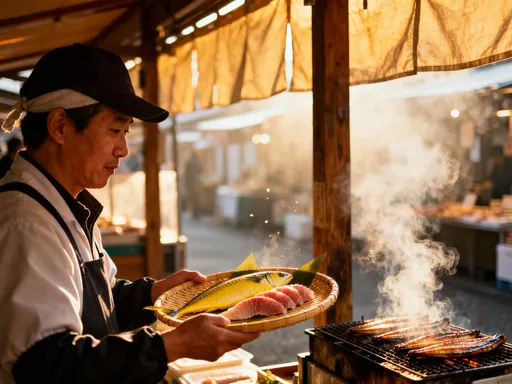
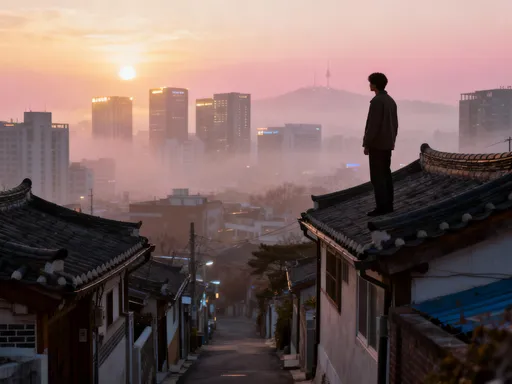
Slowing down in Seoul changes everything. You stop chasing checklists and start feeling the city’s rhythm—the hum of neon at midnight, the quiet dawn over palaces, the steam rising from street food carts in empty alleys. This isn’t about ticking off landmarks; it’s about letting the urban landscape reveal itself in fragments, textures, and fleeting moments. In this journey, I discovered that Seoul’s true skyline isn’t just seen—it’s felt, one unhurried step at a time. The city, often perceived as a whirlwind of efficiency and energy, unveils a different character when approached with patience. Beneath the surface of its high-speed internet, 24-hour convenience stores, and rapid transit lies a quieter Seoul, accessible only to those who choose to move with intention. This is a city where ancient stone walls coexist with glass towers, where the past murmurs in alleyways while the future pulses in subway stations. To truly know Seoul is not to conquer it in three days, but to linger, listen, and allow its layers to unfold.
The Pulse of Slow Travel in a Hyper-Connected City
Seoul is a city that runs on speed. Subways arrive with military precision, delivery bikes weave through traffic in seconds, and digital connectivity ensures that no moment goes unrecorded. Yet, within this environment of relentless momentum, a quiet revolution is taking place—one that values presence over productivity, observation over optimization. The slow travel movement, once associated with rural escapes and countryside cottages, has found a surprising home in the heart of one of Asia’s most dynamic metropolises. In Seoul, slowing down is not a rejection of modernity, but a reclamation of perception. When travelers resist the urge to optimize every minute, they open themselves to the subtle rhythms of urban life—the pause between footsteps on a quiet street, the way light filters through bamboo in a hidden courtyard, the distant chime of temple bells carried on the wind.
What makes slow travel in Seoul so transformative is the contrast it creates. The city’s reputation for efficiency and intensity makes moments of stillness all the more powerful. A traveler who chooses to sit on a bench in a residential neighborhood, watching elderly residents play chess beneath ginkgo trees, experiences a version of Seoul that no guidebook can capture. This deliberate deceleration enhances emotional connection, allowing visitors to move beyond superficial sightseeing and into deeper cultural immersion. It shifts the focus from consumption—how many temples, markets, and cafes one can visit—to contemplation: how a place makes one feel, how its history lingers in the air, how its people shape its character.
Urban landscapes, especially in cities as layered as Seoul, are best absorbed gradually. They are not static backdrops but living, breathing entities shaped by time, memory, and human interaction. Rushing through them is like skimming a novel—possible, but ultimately unsatisfying. When one slows down, patterns emerge: the way traditional hanok houses nestle between modern apartments, how street vendors arrange their wares with quiet care, how the city’s soundscape shifts from morning bustle to evening hush. These details form the true narrative of the city, one written not in brochures but in the everyday lives of its residents. Mindful exploration allows travelers to become temporary locals, not just tourists, and to carry away not just photos, but a sense of belonging.
Dawn Light Over Gyeongbokgung: A Palace Seen Differently
Gyeongbokgung Palace, Seoul’s grandest historical landmark, is often experienced in the crush of midday crowds. Tourists jostle for photos in front of Geunjeongjeon Hall, children in rented hanbok pose beside stone guardians, and guides recite centuries-old stories into microphones. But arriving at dawn, when the palace gates first open, offers a radically different encounter. The air is cool and still, carrying the faint scent of pine and damp earth. The only sounds are the soft crunch of gravel underfoot, the distant call of a magpie, and the occasional rustle of a gardener’s broom. In this quiet, the palace feels less like a museum and more like a living presence, its tiled roofs glowing amber in the rising sun, its wooden eaves casting long, delicate shadows across stone courtyards.
This early hour transforms not just the atmosphere, but the very perception of the cityscape. From the top of the palace’s observation platform, the sprawling metropolis unfolds in layers—low-rise neighborhoods blending into mid-rise apartments, then giving way to the glass and steel towers of central Seoul. The contrast between the ancient palace and the modern skyline is stark, yet harmonious. The palace, built in the 14th century, stands as a quiet anchor amidst the vertical energy of the present. Sunlight sweeps across its rooftops, illuminating centuries of history in a single beam. At this hour, there are no crowds to block the view, no chatter to distract the mind. Instead, there is space—space to breathe, to reflect, to feel the weight of time.
Sensory details become amplified in the stillness. The grain of aged wood on a palace door, the texture of moss on stone lanterns, the faint aroma of roasted barley tea from a nearby vendor—all these elements contribute to a fuller, more intimate understanding of place. This is not passive observation; it is active presence. Travelers who visit at dawn often report a sense of reverence, not because of the site’s historical significance alone, but because of the way it feels in that moment—alive, peaceful, and deeply rooted. It is a reminder that landmarks are not just to be seen, but to be experienced in context, with attention to light, sound, and silence. By choosing to see Gyeongbokgung in this way, one does not just witness history; one participates in it.
Walking the Backbone of Bukhansan: Nature Meets Urban Skyline
A short distance from the city’s center, the forested ridges of Bukhansan rise like a green spine against the sky. This national park, one of the most visited in the world, offers a striking juxtaposition: dense woodland and rugged rock formations just a metro ride from downtown Seoul. A half-day hike through its trails provides not only physical renewal but also a profound shift in perspective. From certain vantage points, the entire city spreads out below—clusters of high-rises, winding rivers, and distant neighborhoods merging into the haze of the horizon. The sight of skyscrapers framed by pine trees and granite peaks is both surreal and grounding, a visual metaphor for Seoul’s unique balance between nature and urbanity.
The emotional impact of this view is difficult to overstate. Standing on a rocky outcrop, wind brushing the face, one feels simultaneously small and connected. The city, often overwhelming at street level, appears orderly and contained from above. Its noise fades into silence, its chaos resolves into pattern. This distance does not diminish Seoul’s energy; rather, it contextualizes it. One begins to see the city not as a monolith, but as a collection of human stories, each building a vessel for lives lived. The hike itself becomes a form of meditation—each step deliberate, each breath measured. There is no rush, no destination beyond the next bend in the trail. The journey, not the summit, becomes the focus.
For those planning such an outing, preparation enhances the experience without complicating it. Wearing sturdy footwear, carrying water, and checking the weather are simple steps that ensure safety and comfort. The trails vary in difficulty, offering options for both casual walkers and seasoned hikers. Early morning or late afternoon hikes provide the best light and fewer people, allowing for uninterrupted immersion in the landscape. Public transportation makes access straightforward, with buses and subways connecting to trailheads. There is no need for specialized gear or guided tours—just the willingness to move slowly and pay attention. Along the way, hikers may encounter local families, elderly couples walking with canes, or students on weekend outings, all sharing the same quiet appreciation for the view. This shared reverence reinforces the idea that nature is not separate from the city, but an essential part of its soul.
Seoul’s Elevated Paths: Tranquility Above the Traffic
Amid the flow of traffic and the rhythm of daily commutes, Seoul has quietly reimagined its urban infrastructure to include elevated walkways that double as linear parks. These green corridors, built on former overpasses or disused rail lines, rise above the noise and fumes of the streets, offering pedestrians a new way to experience the city. Unlike the bustling sidewalks below, these pathways are designed for slowness. Lined with native plants, flowering shrubs, and benches shaded by trellises, they invite lingering rather than rushing. They are not shortcuts, but destinations in themselves—spaces where one can walk, read, or simply sit and watch the city unfold from a different vantage point.
One such path stretches across a densely populated district, connecting neighborhoods that were once divided by busy roads. As visitors walk its length, they gain unexpected views: laundry fluttering between apartment balconies, the domed roof of a neighborhood church, the occasional glimpse of mountains in the distance. These are not the curated sights of tourist brochures, but the authentic textures of urban life. The path becomes a narrative thread, weaving together disparate parts of the city into a coherent story. It also serves a deeper purpose—fostering connection. By linking communities, it encourages residents and visitors alike to explore beyond their usual routes, to discover hidden bookshops, family-run bakeries, or quiet temples tucked between buildings.
What makes these elevated spaces so effective is their design philosophy. They prioritize human scale over efficiency, tranquility over speed. Lighting is soft, surfaces are non-reflective, and plantings are chosen to attract birds and butterflies. The result is a space that feels protected, almost sacred, despite being suspended above a major thoroughfare. These paths exemplify a growing trend in urban planning—one that recognizes the psychological and emotional needs of city dwellers. In a world that often feels too fast, too loud, too crowded, they offer pockets of calm. For travelers, they provide an alternative to the usual itinerary, a chance to experience Seoul not as a checklist, but as a living, evolving environment shaped by thoughtful design and collective care.
Nightscapes Without the Crowd: Chonggyecheon at Midnight
By day, Chonggyecheon Stream is a popular urban park, lined with walkers, joggers, and school groups. Children chase dragonflies near stone bridges, office workers eat lunch on benches, and artists sketch the flowing water. But after midnight, when the city quiets and the crowds disperse, the stream takes on a different character. The water, illuminated by subtle underwater lighting, reflects the glass facades of surrounding buildings like liquid silver. The air is cool, the only sounds the gentle ripple of water and the occasional footstep on the stone path. In this stillness, the city feels transformed—not empty, but introspective.
This after-hours stroll offers a rare opportunity to experience Seoul’s architecture in solitude. Without the distraction of people, the lines of the buildings become more pronounced, their reflections dancing on the surface of the stream. The contrast between the natural flow of water and the rigid geometry of the skyline creates a sense of balance, as if the city is pausing to breathe. Streetlights cast long shadows, and the occasional passing car leaves a trail of light that fades into the distance. It is a surreal, almost cinematic experience—one that feels both intimate and expansive.
Visiting Chonggyecheon at night is not about spectacle, but about sensation. The coolness of the air on the skin, the soft glow of the water, the quiet hum of the city in the background—all contribute to a heightened awareness of the present moment. It is a reminder that cities, like people, have different moods at different times. The same place that feels energetic and chaotic by day can feel peaceful and contemplative by night. For travelers seeking a deeper connection to Seoul, this is a powerful lesson: timing is as important as location. Choosing to visit a place when it is least expected can reveal its most authentic self. In the case of Chonggyecheon, midnight is not the end of the day, but a second beginning—one that belongs to those who are willing to stay up a little later, to walk a little slower, to listen a little more closely.
Hidden Terraces and Rooftop Cafés: Quiet Corners with a View
While many visitors flock to Seoul’s famous observation decks for panoramic views, a quieter, more intimate experience awaits in the city’s lesser-known rooftop cafés and hidden terraces. Nestled in neighborhoods like Seochon, Ikseon-dong, and Seongsu-dong, these spaces are not designed for Instagram backdrops, but for quiet companionship and personal reflection. Dim lighting, soft instrumental music, and the aroma of freshly brewed coffee create an atmosphere of warmth and stillness. The views, while present, are secondary—framed by potted plants, wooden railings, or the silhouette of nearby rooftops. What matters most is not what one sees, but how one feels.
These spaces embody the essence of slow urban travel. They are not destinations to be checked off, but sanctuaries to be discovered. A traveler might stumble upon one while wandering narrow alleys, drawn by the glow of a single lantern or the sound of quiet conversation. Inside, time seems to slow. Conversations unfold without urgency, books are read without distraction, and the city’s pulse is felt as a distant rhythm rather than an immediate demand. The experience is not about escaping the city, but about engaging with it on different terms—choosing stillness over spectacle, depth over breadth.
Many of these cafés are housed in renovated buildings, blending traditional architectural elements with modern design. Exposed wooden beams, stone walls, and sliding paper doors coexist with minimalist furniture and industrial lighting. This fusion reflects Seoul’s broader identity—a city that honors its past while embracing the future. By choosing to spend time in such spaces, travelers participate in this balance. They are not passive observers, but temporary members of a community that values slowness, craftsmanship, and authenticity. These rooftop retreats are not hidden because they are exclusive, but because they are meant to be found by those who are looking—not with their cameras, but with their hearts.
Why the City Breathes Better When You Do
The cumulative effect of slow travel in Seoul is profound. It sharpens awareness, deepens memory, and fosters a more personal relationship with the city. Each unhurried moment—whether watching dawn break over a palace, hiking above the skyline, or sipping tea on a rooftop—adds a layer to one’s understanding. These experiences are not isolated; they form a mosaic of presence, each piece contributing to a fuller picture of what it means to truly know a place. The city, in turn, reveals itself not as a collection of attractions, but as a living, breathing entity with its own rhythms, moods, and stories.
Seoul does not need to be conquered. It does not demand to be seen in a single day or captured in a hundred photos. It invites participation—quiet, attentive, and open-hearted. When travelers slow down, they align themselves with the city’s natural pulse, allowing its energy to flow through them rather than against them. They begin to notice the small things: the way a street vendor arranges persimmons in a perfect pyramid, how a grandmother sweeps her doorstep with quiet care, how the light changes on a mountainside as the seasons turn. These details are not incidental; they are essential. They are the heartbeat of the city, felt only by those who take the time to listen.
In a world that glorifies speed and productivity, choosing to move slowly through a city like Seoul is an act of quiet resistance. It is a declaration that some things cannot be rushed, that presence matters more than progress, that feeling a place is more valuable than photographing it. Seoul, with its seamless blend of ancient and modern, natural and urban, offers the perfect canvas for this kind of travel. Its cityscape does not merely exist to be seen—it exists to be felt, one unhurried step at a time. And in that feeling, in that connection, lies the true reward: not just the memory of a place, but the lasting impression of having been fully, deeply, and peacefully present within it.